-
How to Choose the Right Shank Material for a Shoe's Arch Support
Oct 19 , 2026
The shank is the stiff insert between the insole and outsole, running from the heel toward the ball of the foot. Its job is to support the arch and, in many designs, control torsion in the midfoot. Get the material or the geometry wrong, and a shoe feels floppy by lunchtime or fights the foot's natural motion. There is no single best material. The right choice depends on load, available thickness,...
-
Sink Mark Improvement on Soft 65A TPU — A Practical Analysis Based on Remote Feeding and Thermal Shrinkage
Oct 12 , 2026
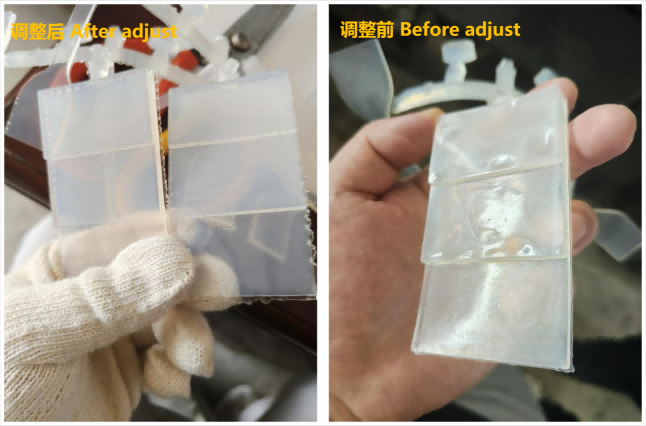
Background: 65 Shore A polyether-based soft TPU Defect: Extensive surface waviness and sink marks on the test specimen Adjustments: 2nd-stage injection pressure 35→38; 3rd-stage injection pressure 30→35; 1st-stage packing pressure 30→35; 2nd-stage packing pressure 30→35. Hold switch method and hold time (12.0s) remain unchanged. Result: Flat specimen surface with sink marks eliminated. 1. Debunkin...
-
TPU vs. TPEE Shoe Shanks: An Honest Comparison — and Why TPU Remains the Smart Choice for Most Footwear Brands
Sep 20 , 2026
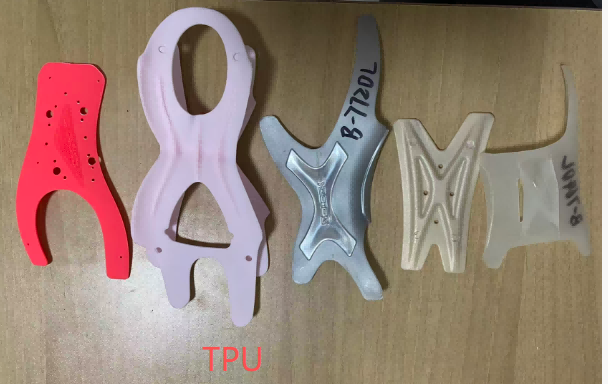
If you've ever compared shank or support-plate options with a footwear material supplier, TPU and TPEE almost always come up as a pair. They get compared constantly — and for good reason: they're close cousins in the "moldable elastomer" family, and both show up across the same product categories. But they behave differently enough under load that picking the wrong one — or the wrong grade within ...
-
Hydrolysis and Aging in TPU vs. TPE A Technical Comparison
Sep 14 , 2026
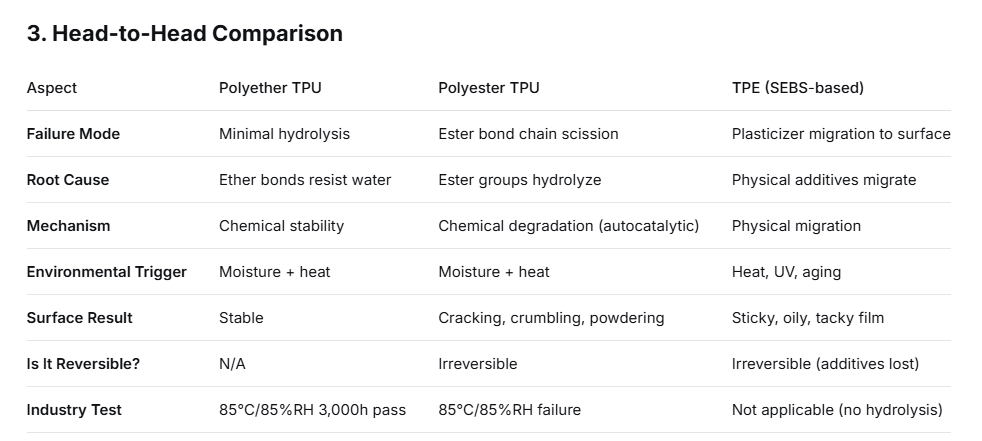
Thermoplastic Polyurethane (TPU) and Thermoplastic Elastomer (TPE) are both widely used in soft-touch overmolding applications, but their failure modes under environmental exposure—particularly moisture and heat—are fundamentally different. Understanding these differences is critical for material selection in industrial applications where long-term durability matters. This article examines the hyd...
-
TPU Thick‑Wall Molding: Distinguishing Shrinkage Sink Marks from Short‑Shot Defects
Sep 07 , 2026
Thick-wall TPU injection-molded parts (wall thickness ≥10 mm) often suffer from surface dents or depressions. It is easy to confuse shrinkage‑induced sink marks with short‑shot (incomplete filling) defects. Although they look similar to the naked eye, their root causes, diagnostic logic, and corrective measures are completely different. Misdiagnosis leads to wasted time and incorrect machine adjus...
-
How to Select TPU for PVC Modification
Aug 31 , 2026
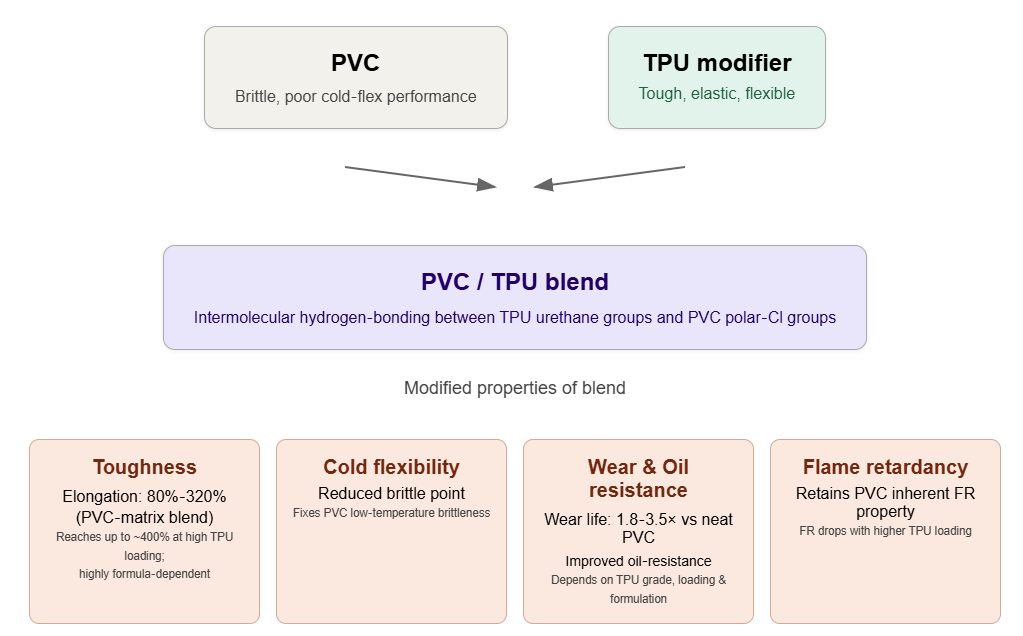
Successful PVC-TPU polymer-blend modification relies not only on material intrinsic compatibility (intermolecular hydrogen‑bonding between TPU urethane groups and PVC polar C‑Cl groups), but also on proper TPU grade selection and strict processing‑temperature control. PVC is a thermally‑sensitive polymer; its narrow safe‑processing window creates unique practical challenges for compounders. The gu...
-
Why Add TPU to PVC? The Science and Benefits
Aug 26 , 2026
Polyvinyl chloride (PVC) has long been valued across industries for its cost‑effectiveness, flame retardancy, electrical insulation, and chemical resistance. However, virgin PVC suffers from inherent limitations: low impact strength, poor thermal stability during processing, and inadequate low‑temperature flexibility. To overcome these constraints, thermoplastic polyurethane (TPU) has emerged as o...
-
Compare 3D Printing with traditional injection
Feb 02 , 2026
3D Printing: 3D printing, also known as additive manufacturing, builds objects layer by layer using a digital design. It involves melting or curing to create a three-dimensional object. Traditional Injection Molding: Injection molding is process where molten is injected into a cavity under high pressure. The material then solidifies and takes the shape of the mold. Design Flexibility: 3D Printing:...
-
What transparent of TPU influence for the color appearance of TPU products ?
Oct 31 , 2024
If non-transparent TPU (Thermoplastic Polyurethane) is changed to a transparent form without altering the incorporation of colorants, it can lead to a few potential problems: Inconsistent or altered color appearance:The colorants used in non-transparent TPU are typically designed for its opaque nature. When the TPU becomes transparent, the interaction between light and the colorants changes, which...
-
How to solve the dark specks and spots on TPU extrudate or TPU injection products
Jun 25 , 2023
What cause dark specks and spots on TPU extrudate or TPU injection products ① Contamination in the raw material: TPU is sensitive to contamination from impurities present in the raw material. This can lead to dark specks and spots in the extruded or injection-molded product. ② Screw and barrel contamination: If the screw and barrel are not cleaned properly, leftover resin from previous r...



 IPv6 network supported