
Successful PVC-TPU polymer-blend modification relies not only on material intrinsic compatibility (intermolecular hydrogen‑bonding between TPU urethane groups and PVC polar C‑Cl groups), but also on proper TPU grade selection and strict processing‑temperature control. PVC is a thermally‑sensitive polymer; its narrow safe‑processing window creates unique practical challenges for compounders. The guidance below draws from real‑world extrusion and injection‑molding production experience.
Temperature: The Most Critical Processing Constraint
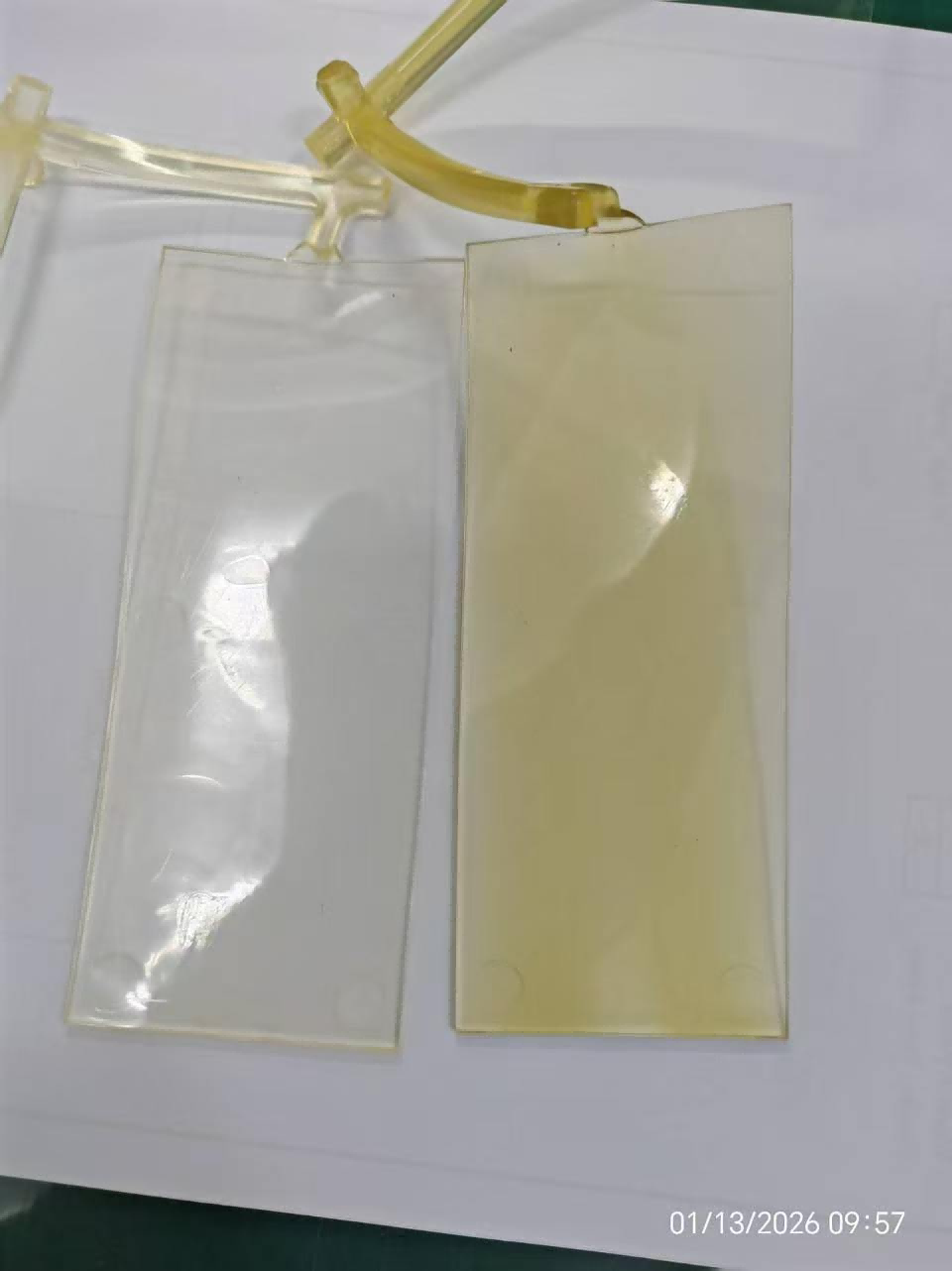
PVC is susceptible to thermal degradation under excessive heat. When overheated, PVC decomposes, releases hydrogen chloride (HCl), and develops yellow‑to‑amber discoloration — this risk is especially obvious for transparent or light‑colored formulations. Processing temperature must match both the forming method and equipment back‑pressure levels.
Injection molding: Recommended processing temperature 160‑165℃. Higher inherent back‑pressure inside injection equipment promotes full melting and uniform dispersion of TPU modifier within the PVC matrix.
Pipe/profile extrusion: Recommended processing temperature 175‑180℃. Extrusion runs with relatively low back‑pressure; moderately higher temperature compensates to achieve good melt homogeneity, while staying below PVC’s degradation threshold.
Yellowing risk threshold: Avoid sustained temperatures above 190‑200℃ . Exceeding this range triggers obvious thermal degradation and discoloration, which is unacceptable for color‑critical parts.
Incomplete Melting — Common Compatibility‑Related Field Failure
Selecting an unsuitable TPU grade is a frequent root‑cause of production rejects.
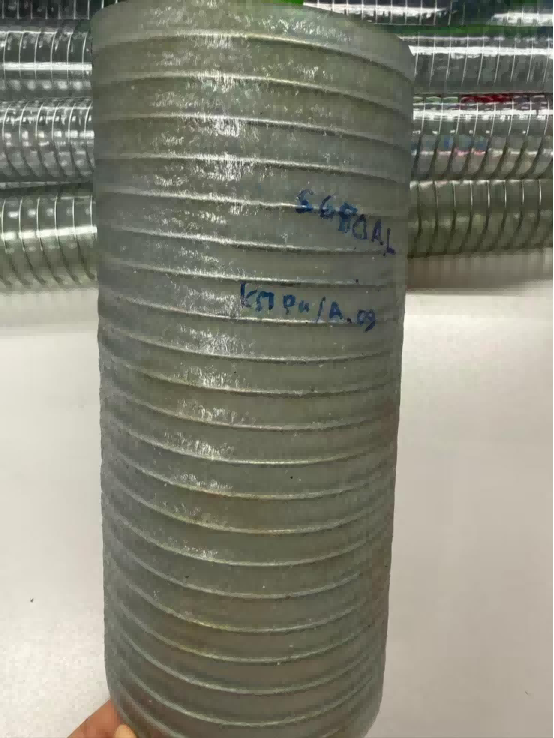
Field case: Adding 7 wt% of an incompatible hard‑grade TPU (S‑680AL) into PVC pipe formulation, processed at 170‑190℃. The TPU failed to fully fuse into the PVC continuous matrix. Visible unmelted TPU particles appeared across the extruded pipe surface, creating surface blemishes and local mechanical weak points.
Not every commercial TPU is fit for direct melt‑blending with PVC. Hard‑grade TPUs above Shore A 80 normally require melting temperatures near 200℃ or higher, which exceeds PVC’s thermal‑stability limit. Such hard TPU grades cannot achieve good dispersion under PVC‑safe processing conditions and should be avoided for PVC modification work.
Core Principles for TPU Grade Selection for PVC Modification
1. Match TPU melt‑behaviour to PVC’s safe processing window
The selected TPU must achieve complete melting and fine dispersion within PVC’s practical processing window (160‑185℃). If a TPU requires >190℃ for full fusion, it will produce unmelted inclusions and poor blend homogeneity.
2. Choose polyester or polyether TPU based on end‑use environment
Polyester based TPU: Preferred for oil‑resistant applications, e.g. industrial hoses, automotive tubing. Delivers superior oil‑resistance performance.
Polyether based TPU: Better hydrolysis resistance and weathering performance, for outdoor‑exposed or high‑humidity service environments.
3. Optimize TPU loading dosage
Typical practical loading range: 5 ~ 30 wt% within PVC‑matrix blends.
- At 5 % loading: Noticeable improvement in low‑temperature flexibility and impact resistance.
- At 20‑30 % loading: The blend obtains pronounced elastomeric‑like performance, while still preserving PVC‑derived cost advantages and baseline flame‑retardant performance.
> Important trade‑off reminder (consistent with prior article): As TPU fraction rises, overall flame‑retardant performance of PVC‑matrix blends will gradually decline.
Recommended Solution: B‑3470A35, Purpose‑Built TPU for PVC Modification
B‑3470A35 is a custom‑developed modifier TPU, validated across multiple production trials for PVC‑TPU blend systems. Key advantages:
1. Full melting within PVC‑safe temperature range: Achieves complete melt incorporation at 160‑165℃ (injection molding) and 175‑180℃ (extrusion). No need to push temperature into PVC‑degradation zones.
2.Free of unmelted particles: Consistent homogeneous dispersion in real‑world production; avoids surface defects originating from poor TPU fusion.
3.Good color stability: When processed within recommended temperature limits, minimises yellowing risks associated with PVC thermal decomposition, suitable for transparent / light‑coloured articles.
4.Broad process adaptability: Works well for both high‑back‑pressure injection‑molding and low‑back‑pressure extrusion workflows.
Email Address
koslen@163.comContact Number
18900373733Address
Petrochemical light industry community,Wangchuan Town,Hui an County


If you are interested in our products and want to know more details,please leave a message here,we will reply you as soon as we can.

 IPv6 network supported